
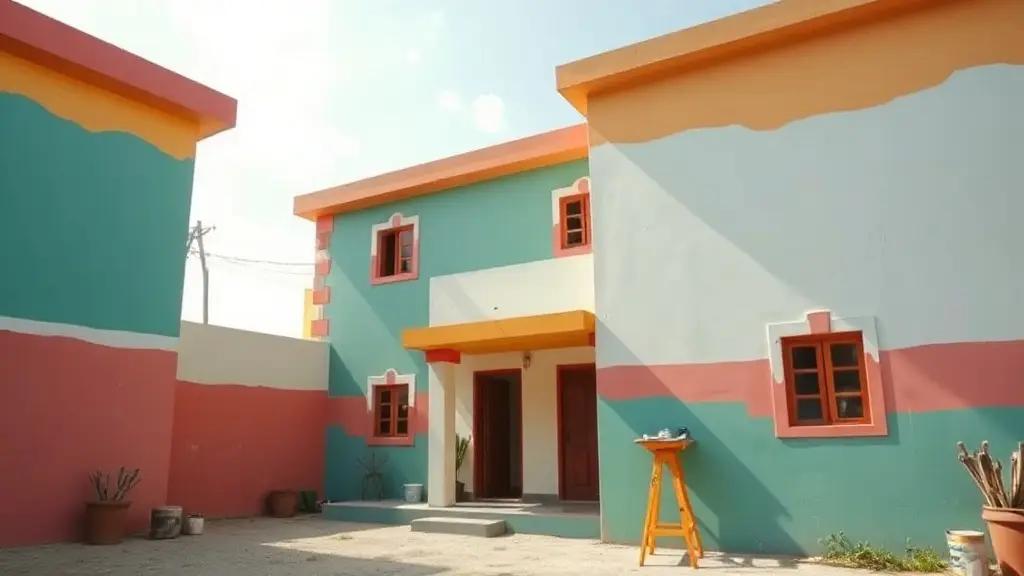
Colour trends in the automotive world often mirror what is happening in interior design and architecture. The arrival of a sophisticated muted shade like Earl Gray on a rugged vehicle has sparked fresh conversations about how neutral, understated tones can make a bold visual statement. For homeowners and contractors across Tamil Nadu, this is the perfect moment to explore how similar earthy, grey-toned palettes can transform the exterior of a home — offering timeless elegance that stands up to the region's harsh sun, heavy monsoon rains, and humid coastal air.
Why Neutral and Grey Tones Work Beautifully on Indian Exteriors
Shades such as warm grey, taupe, and stone beige have surged in popularity among Tamil Nadu homeowners because they complement the natural surroundings — red soil landscapes, lush greenery, and terracotta roof tiles. Unlike bright or highly saturated colours that fade quickly under intense UV exposure, muted neutral tones tend to age gracefully. They mask minor dust accumulation between repaints and create a refined, modern kerb appeal that suits both contemporary villas and traditional houses alike.
The key to making these shades last outdoors is pairing the right colour with a high-performance exterior paint that contains UV-resistant and anti-algae properties. In humid districts like Chennai, Coimbatore, and Madurai, moisture intrusion is a constant threat, so applying a quality waterproofing coat beneath the exterior paint layer is strongly recommended before any topcoat is applied.
Preparing Your Walls Before Applying Any Exterior Colour
Even the most stunning colour choice will fail if the underlying surface is not properly prepared. Cracks, uneven plaster, and chalky old paint can cause a new coat to peel within a single monsoon season. Professionals consistently recommend applying a layer of wall putty to fill hairline cracks and create a smooth, uniform base before the final colour goes on. This step is especially important for older homes in Tamil Nadu where walls may have accumulated years of salt deposits or surface damage.
Surface preparation also involves pressure-washing to remove dirt and mould, sanding rough patches, and allowing adequate drying time. Skipping these steps — however tempting when working to a tight renovation deadline — almost always results in premature paint failure, costing far more in the long run than a proper prep job would have.
How to Bring Trending Shades to Life with Texture and Finish
Once the surface is ready and the base coats are applied, the choice of finish dramatically changes how a colour reads in real life. A flat or matte finish on a neutral grey gives a contemporary, European-inspired look, while a smooth silk finish adds a subtle luminosity that catches the golden Tamil Nadu light beautifully. For homeowners wanting to add depth and architectural interest, texture paint applied in a complementary shade can highlight feature walls, columns, or gate pillars, creating a layered, designer look without excessive cost.
Contractors working on multi-unit residential projects or commercial buildings will find that combining a neutral base colour with contrasting texture paint accents is both cost-effective and visually impressive. It also reduces the need for additional decorative cladding, saving time on large-scale projects.
Frequently Asked Questions
Q: Can I use grey or neutral exterior paint colours in high-humidity areas of Tamil Nadu?
Absolutely. Neutral and grey shades are available in weather-resistant exterior paint formulations specifically designed for high-humidity and coastal climates. Pairing them with a proper waterproofing undercoat will ensure the colour stays vibrant and the wall stays moisture-free for many years.
Q: How many coats of exterior paint do I need for a smooth, even finish?
For best results, most professionals recommend at least two finish coats of exterior paint over a primed and putty-treated surface. In areas exposed to direct sun or driving rain, a third coat can significantly improve durability and colour retention.
Q: Is wall putty really necessary before painting exterior walls?
Yes, wall putty is highly recommended for exterior walls, particularly in Tamil Nadu where thermal expansion, monsoon moisture, and ageing plaster create surface irregularities. Putty fills micro-cracks, improves adhesion, and gives the topcoat a far smoother and longer-lasting finish than painting directly on bare plaster.
Related Products at Quality Colours
- Exterior Paint — Weather-resistant colours for Tamil Nadu homes
- Wall Putty — Smooth base for flawless exterior and interior finishes
- Waterproofing Solutions — Protect walls from monsoon and moisture damage
- Texture Paint — Add depth and designer appeal to feature walls
- Wood Primer — Essential first coat for all wooden surfaces
Need expert paint advice? Call or WhatsApp Quality Colours: +917418831122
Source: 2023 Jeep Gladiator gets Earl Gray exterior paint color - HT Auto


