
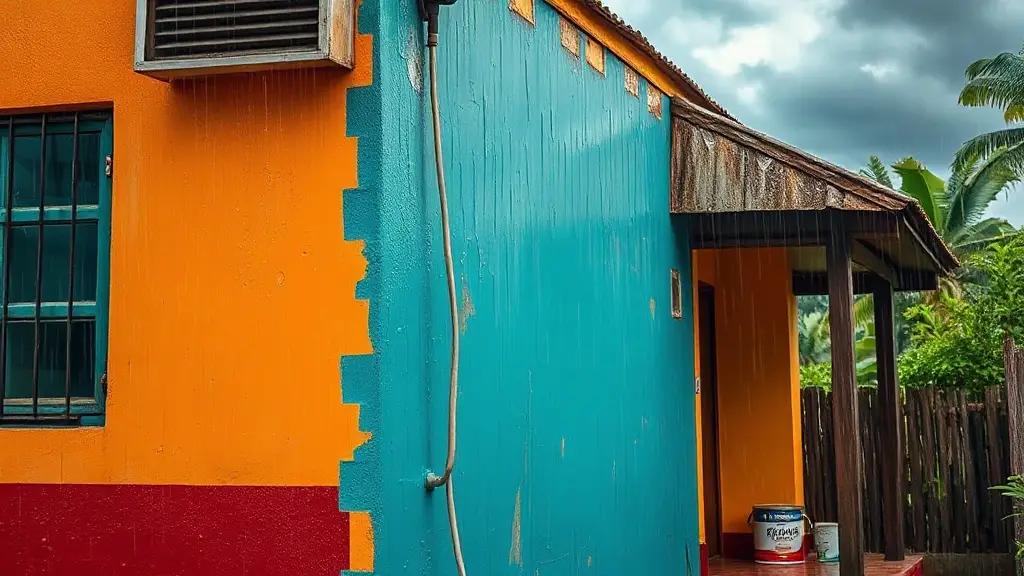
Climate change is no longer a distant concern for scientists — it is showing up on the walls of homes across Tamil Nadu. Homeowners and contractors in cities like Chennai, Coimbatore, Madurai, and Salem are noticing cracks, peeling paint, seepage, and stubborn damp patches appearing sooner than expected after a fresh coat of paint. As weather patterns grow more extreme — with harsher summers, longer monsoons, and sudden humidity spikes — your building's exterior and interior surfaces take the brunt of the damage. Understanding how shifting climate conditions affect your walls is the first step toward choosing smarter, longer-lasting paint solutions.
Extreme Heat Is Cracking and Fading Your Exterior Walls
Tamil Nadu summers have always been intense, but rising temperatures in recent years are accelerating the deterioration of exterior wall surfaces. Prolonged UV exposure causes standard paints to fade, chalk, and lose their binding strength far earlier than their stated lifespan. Thermal expansion — where wall surfaces expand during the day and contract at night — creates micro-cracks that gradually widen over time, allowing moisture to enter deep into the masonry.
Choosing a high-quality exterior paint with UV-resistant and elastomeric properties can make a significant difference. These advanced formulations flex slightly with the wall surface rather than cracking under thermal stress, maintaining a protective barrier even through peak summer months. At Quality Colours, we stock a range of premium exterior paint options suited to Tamil Nadu's punishing sun.
Monsoon Moisture and Seepage Are a Growing Problem
The monsoon season — already challenging for building surfaces — has become increasingly unpredictable. Heavy downpours, rising damp from waterlogged ground, and poor drainage are causing water seepage through walls, terrace slabs, and foundations at alarming rates. Once moisture penetrates a wall, it leads to efflorescence (white salt deposits), bubbling paint, mould growth, and structural weakening over the long term.
Applying a dedicated waterproofing solution before painting is now considered essential rather than optional for any home in Tamil Nadu. A proper waterproofing treatment seals hairline cracks and pores in the masonry, blocking moisture at the source. Pair this with a good wall putty base coat to create a smooth, sealed surface that prevents water from finding entry points beneath the paint film. This two-step approach significantly extends the life of your paint job and keeps interior walls dry and healthy.
Indoor Humidity Is Damaging Interior Walls and Woodwork Too
It is not only exterior surfaces that suffer — indoor humidity levels in coastal and semi-urban Tamil Nadu can remain elevated for months, affecting interior paint finishes and wooden surfaces alike. High moisture in the air causes interior paint to lose adhesion, encourages mould and mildew to grow in corners and bathrooms, and causes wood doors, frames, and furniture to swell, crack, or rot from within.
Protecting wooden elements starts with applying a quality wood primer before any topcoat, creating a moisture-resistant seal that keeps timber stable and extends its life considerably. For interior walls that feel damp or show discolouration, consider a texture paint with anti-fungal additives — it adds an attractive finish while actively resisting mould growth. These targeted solutions help homeowners stay ahead of climate-driven deterioration rather than constantly repainting damaged surfaces.
Frequently Asked Questions
Q: How often should I repaint the exterior of my home in Tamil Nadu's climate?
In Tamil Nadu, the combination of strong UV rays and heavy monsoon rains typically means exterior paint needs refreshing every 3 to 5 years. Using premium exterior paint with UV resistance and applying a waterproofing base coat can extend this cycle considerably.
Q: Is waterproofing treatment necessary before painting, or can I paint directly on the wall?
For any exterior wall or moisture-prone area in Tamil Nadu, waterproofing before painting is strongly recommended. Painting directly over damp or porous masonry without waterproofing leads to rapid peeling, bubbling, and seepage problems. A waterproofing coat followed by wall putty gives paint the best possible foundation.
Q: Can texture paint help hide existing cracks and uneven wall surfaces?
Texture paint can mask minor surface irregularities and give walls an attractive finish, but deeper cracks should be properly filled and primed first. For best results, apply wall putty to level the surface, allow it to cure fully, then apply texture paint for a durable and visually appealing finish that also adds a layer of protection.
Related Products at Quality Colours
- Exterior Paint — UV-resistant and weather-proof formulations
- Waterproofing Solutions — protect walls from monsoon seepage
- Wall Putty — smooth, sealed base for longer-lasting paint
- Texture Paint — stylish finishes with anti-fungal protection
- Wood Primer — moisture-resistant protection for all woodwork
Need expert paint advice? Call or WhatsApp Quality Colours: +917418831122
Source: Geoengineering: an incomplete solution to a poorly formulated problem - Sciences Po


