
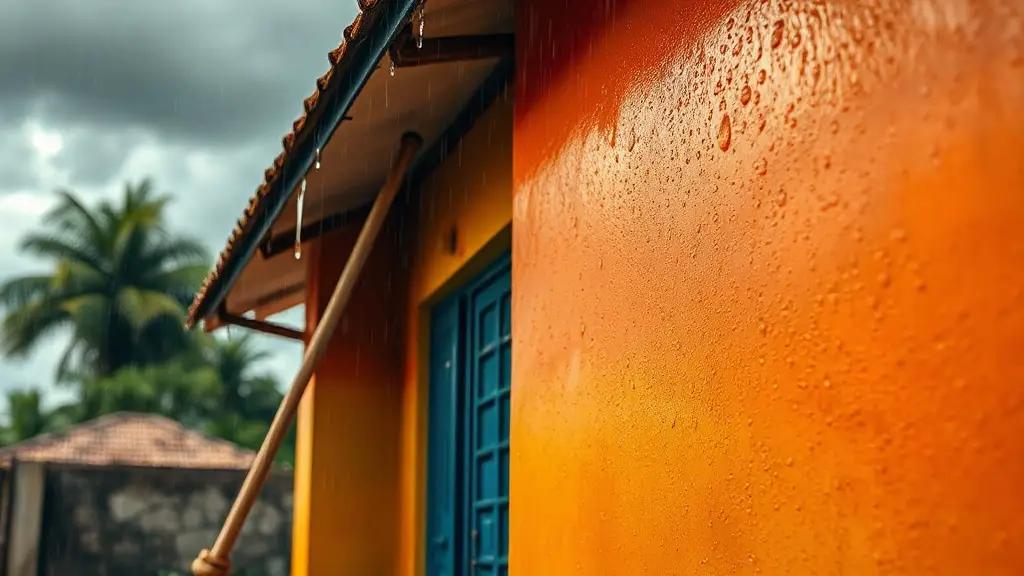
The monsoon season has long captivated Indian artists, who find endless inspiration in the drama of dark clouds, cascading rain, and the earthy scent of wet soil. From classical Ragamala paintings to contemporary canvases, rainfall is deeply woven into India's artistic identity. But for homeowners and contractors across Tamil Nadu, the monsoon tells a very different story — one of peeling walls, seeping moisture, and damaged exteriors. While artists celebrate the rains, your home needs to be fully prepared to withstand them. Here is what every property owner should know before the next downpour arrives.
The Cultural Romance of Rain in Indian Art
Across centuries of Indian painting, the monsoon has served as a powerful symbol of longing, renewal, and abundance. Miniature paintings from the Mughal and Rajput traditions frequently depicted the Megh Malhar raga — a musical mode believed to summon the rains — through lush imagery of peacocks dancing, lightning flashing, and lovers reuniting under stormy skies. Tamil Sangam poetry, too, is rich with references to the kurinji and mullai landscapes shaped by seasonal rains, reflecting how deeply the monsoon is embedded in South Indian cultural expression.
Contemporary Indian artists continue this tradition, using blues, greys, and deep greens to evoke the monsoon's mood on canvas. This seasonal obsession with rain in art reminds us how transformative water truly is — both as a creative force and, unfortunately, as a destructive one when your home's exterior is left unprotected.
How Monsoon Rains Damage Your Home's Walls and Surfaces
In Tamil Nadu, the northeast monsoon between October and December, combined with the southwest monsoon from June onwards, subjects buildings to prolonged exposure to moisture and humidity. This leads to a range of serious problems including paint bubbling, efflorescence (salt deposits forming white patches), fungal growth, seepage through walls, and structural dampness that weakens plaster over time. External walls bear the brunt of wind-driven rain, while interior walls can suffer from rising dampness if the foundation and exterior surfaces are not adequately sealed.
The solution begins well before the rains arrive. Applying a high-quality exterior paint with water-repellent properties creates a breathable yet protective shield on your outer walls. Equally important is using a reliable waterproofing treatment on terraces, parapet walls, and any surface prone to water pooling. Skipping these steps can turn the season's first showers into an expensive repair project.
Preparing Your Home's Exterior Before the Rains Hit
Professional contractors and experienced homeowners in Tamil Nadu know that monsoon preparation is a multi-step process. Start by inspecting all exterior walls for existing cracks, loose plaster, or gaps around window frames and drain pipes. These entry points must be filled and sealed before any paint is applied. Using a good wall putty to smooth and strengthen the surface ensures that your topcoat adheres evenly and lasts longer through repeated wet-dry cycles that Tamil Nadu's climate routinely delivers.
For wooden doors, window frames, and furniture exposed to humidity, applying a quality wood primer before the finish coat prevents swelling, warping, and fungal staining — all common complaints during the rainy months. If you want to add character to interior accent walls without worrying about moisture damage, a texture paint formulated for humid conditions can deliver both style and durability. Planning and executing these steps with the right products makes the difference between a home that weathers the monsoon beautifully and one that requires major repairs every year.
Frequently Asked Questions
Q: When is the best time to paint exterior walls in Tamil Nadu before the monsoon?
Ideally, exterior painting should be completed at least four to six weeks before the monsoon season begins. This allows paint and waterproofing coatings sufficient time to cure fully, ensuring maximum adhesion and protection when the rains arrive.
Q: Can I apply waterproofing treatment myself, or do I need a professional contractor?
Basic waterproofing products such as acrylic-based coatings can be applied by a careful homeowner following product instructions. However, for terraces, foundations, or walls with existing seepage issues, it is strongly recommended to hire an experienced contractor who can identify the source of the problem and apply the correct waterproofing system properly.
Q: How does wall putty help during the monsoon season?
Wall putty fills hairline cracks, evens out uneven surfaces, and strengthens the bond between the wall and the paint coat. This reduces the chances of moisture penetrating behind the paint film, which is one of the primary causes of bubbling and peeling during heavy rainfall periods.
Related Products at Quality Colours
- Exterior Paint – Weather-resistant coatings for Tamil Nadu homes
- Waterproofing Solutions – Terrace, wall, and basement protection
- Wall Putty – Surface preparation for longer-lasting paint
- Wood Primer – Protect doors and window frames from monsoon humidity
- Texture Paint – Stylish, durable finishes for interior accent walls
Need expert paint advice? Call or WhatsApp Quality Colours: +917418831122
Source: Painting the rain: How Indian art obsesses with the monsoons - The Indian Express


