
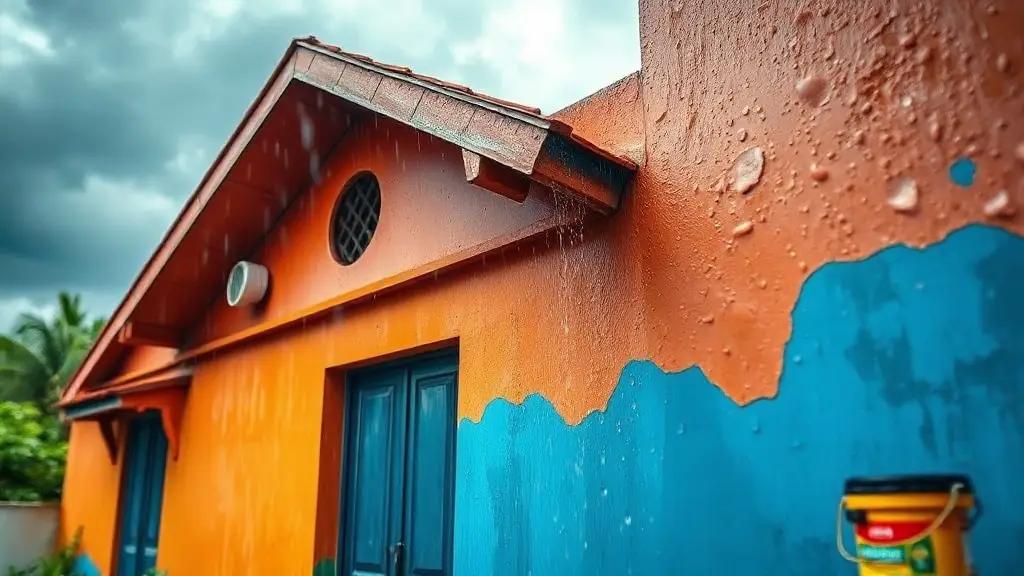
Every year, as the southwest and northeast monsoons sweep across Tamil Nadu, homeowners and contractors face a familiar challenge — keeping buildings safe from relentless rain, rising humidity, and moisture seepage. While most people think about protecting their vehicles during the rainy season, your home's walls, ceilings, and wooden fixtures need equal — if not more — attention. Taking proactive steps before and during the monsoon can save you thousands of rupees in repair costs and keep your interiors looking fresh all year round.
Why Monsoon Moisture Is Your Home's Biggest Enemy
Heavy rainfall doesn't just wet the outside of your building — it works its way into tiny cracks, porous surfaces, and poorly sealed joints, gradually weakening the structure from within. Dampness causes paint to bubble and peel, walls to develop ugly stains, and plaster to crumble. In coastal districts of Tamil Nadu like Chennai, Cuddalore, and Nagapattinam, the combination of salt-laden air and monsoon rains accelerates this damage even further.
The first line of defence is ensuring your exterior walls are properly sealed before the rains arrive. Applying a high-quality waterproofing solution to exterior surfaces creates a protective barrier that repels water while still allowing walls to breathe. This prevents the dreaded seepage that leads to damp patches on interior walls — one of the most common complaints from homeowners across Tamil Nadu during the rainy months.
Surface Preparation: The Step Most People Skip
Many homeowners make the mistake of applying fresh paint directly over damaged or uneven surfaces, only to find that the new coat peels off within weeks once the rains hit. Proper surface preparation is absolutely critical for long-lasting results. Start by filling hairline cracks and smoothing out rough patches using a good wall putty. Wall putty provides a uniform, strong base that helps the topcoat bond firmly, preventing moisture from sneaking beneath the paint layer and causing it to lift.
For wooden doors, window frames, and furniture that are exposed to humid conditions, skipping the primer is a costly mistake. A reliable wood primer seals the grain of the timber, prevents swelling caused by moisture absorption, and ensures the topcoat adheres evenly. Primed wood surfaces resist warping and cracking far better during the prolonged wet season that Tamil Nadu experiences between June and December.
Choosing the Right Paint for Monsoon-Prone Exteriors
Not all paints are created equal when it comes to handling the punishing conditions of an Indian monsoon. Standard interior emulsions will quickly fail if used on exterior surfaces exposed to driving rain and high humidity. Instead, opt for a premium exterior paint that is specifically formulated to withstand UV radiation, fungal growth, and water ingress. These paints form a tough, flexible film that expands and contracts with the wall as temperatures fluctuate, preventing cracking.
For homeowners looking to add both protection and visual appeal to their walls, texture paint is an excellent choice for exterior facades. Beyond its decorative finish, texture paint adds an extra layer of thickness that helps water run off the surface rather than soaking in. Whether you own a villa in Coimbatore, an apartment block in Chennai, or a commercial building in Madurai, investing in the right exterior paint system before the monsoon hits is one of the smartest decisions you can make for your property.
Frequently Asked Questions
Q: How soon before the monsoon should I waterproof my exterior walls?
Ideally, waterproofing and exterior painting should be completed at least four to six weeks before the monsoon season begins. This gives the coatings adequate time to cure fully and bond to the surface, ensuring maximum protection once the heavy rains arrive in Tamil Nadu.
Q: Can I apply wall putty during the rainy season if my walls are already damp?
It is best to avoid applying wall putty on wet or damp surfaces, as moisture trapped beneath the putty layer will prevent proper adhesion and cause it to crack or peel. Allow walls to dry completely — ideally during a dry spell — before applying putty, primer, and paint for lasting results.
Q: How do I prevent fungal growth and green algae on my exterior walls during monsoon?
Using an anti-fungal exterior paint or adding a fungicide additive to your paint mix is the most effective way to prevent mould, algae, and mildew from forming on exterior walls during humid monsoon conditions. Regular cleaning of exterior surfaces and ensuring proper drainage around the building also helps significantly.
Related Products at Quality Colours
- Waterproofing Solutions — Keep moisture out of your walls this monsoon
- Exterior Paint — Durable, weather-resistant finishes for Tamil Nadu homes
- Wall Putty — Smooth, strong base coat for long-lasting paint jobs
- Texture Paint — Decorative and protective finishes for exterior facades
- Wood Primer — Protect doors and window frames from monsoon moisture
Need expert paint advice? Call or WhatsApp Quality Colours: +917418831122
Source: How to maintain your EV during monsoon season: Tips and suggestions - The Times of India


