
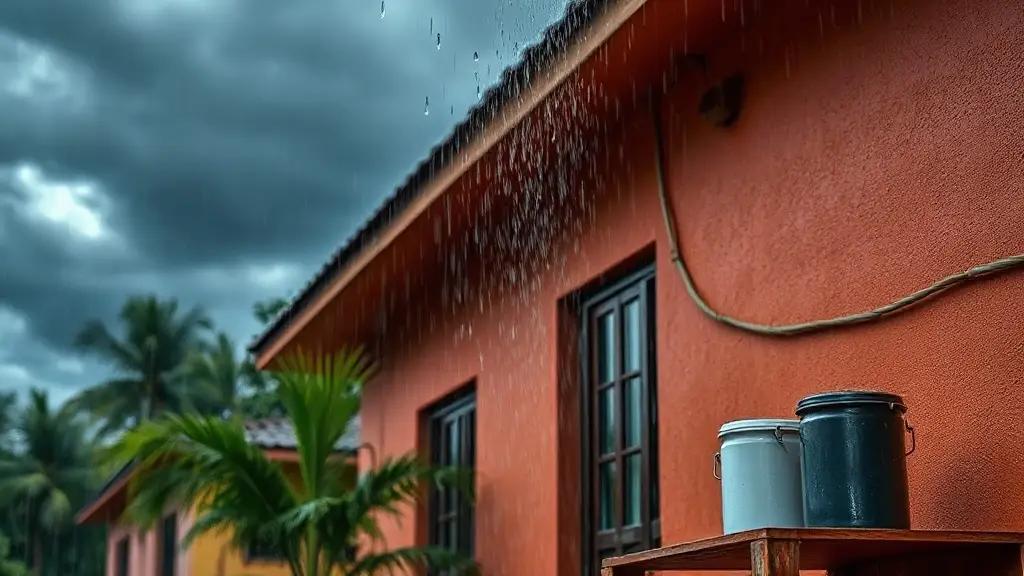
Every year, Tamil Nadu homeowners and contractors face the same challenge — the monsoon season arrives with full force, and walls that looked perfectly fine just months ago begin to show cracks, dampness, peeling paint, and stubborn water stains. Rain may be a blessing for our fields and reservoirs, but it can be a silent destroyer of your home's surfaces if the right protective measures are not in place. Understanding how moisture interacts with your walls — and choosing the correct products before the rains hit — can save you thousands of rupees in repairs and repainting costs down the line.
How Monsoon Moisture Damages Walls and Exteriors
When rainwater seeps into the outer surfaces of a building, it does not stop at the facade. Moisture penetrates tiny cracks and pores in the plaster, causing the underlying layers to soften and weaken. Over time, this leads to efflorescence — those chalky white patches you often see on compound walls — as well as blistering, flaking, and in severe cases, structural dampness that travels all the way to your interior walls.
Exterior walls in Tamil Nadu are especially vulnerable because the state receives both the Northeast and Southwest monsoons, meaning buildings endure prolonged wet spells across different seasons. Applying a high-quality exterior paint with weather-resistant and anti-fungal properties before the rains is one of the most effective first lines of defence. Look for formulations that offer UV resistance along with water repellency so your walls stay protected even after the rains clear and the harsh summer sun returns.
The Role of Waterproofing in Long-Term Protection
Paint alone, while important, is only part of the solution. A proper waterproofing treatment applied to terraces, sunshades, parapet walls, and external plaster can dramatically reduce the amount of moisture that ever reaches your paint surface in the first place. Waterproofing compounds create a seamless, flexible barrier that bridges hairline cracks and prevents water ingress at the most vulnerable points of a structure.
For homeowners who have already noticed damp patches on their ceilings or internal walls, it is a strong indicator that the terrace or external slab above has not been adequately waterproofed. Addressing this issue before repainting is critical — skipping waterproofing and painting directly over damp surfaces will only lead to the same problem recurring within a single rainy season. Always allow surfaces to dry completely, treat the root cause of moisture, and then proceed with a quality finish coat.
Preparing Surfaces Properly Before Monsoon Repainting
Surface preparation is where many DIY paint jobs go wrong. Painting over loose, crumbling, or uneven plaster without proper preparation is a common mistake that shortens the life of any paint system significantly. Before applying any exterior or interior finish, walls should be thoroughly cleaned, all loose material removed, and any cracks filled and smoothed. This is where a good wall putty comes in — applying wall putty creates a smooth, uniform base that improves paint adhesion and gives your walls a more refined finish.
For wooden doors, window frames, and furniture that are exposed to rain and humidity, a coat of wood primer before your topcoat helps seal the wood grain, prevents swelling, and stops moisture from causing the paint to peel prematurely. Similarly, if you are looking to add a decorative element to interior feature walls while also adding a layer of protection, texture paint is an excellent choice — it hides minor surface imperfections and provides a durable, washable surface that stands up well to the humid conditions that follow heavy rainfall.
Frequently Asked Questions
Q: When is the best time to repaint exterior walls in Tamil Nadu?The ideal window is just before the monsoon season begins — typically between February and May — when walls are dry and temperatures are moderate. This allows paint and waterproofing products sufficient curing time before the rains arrive. If repainting after the rains, wait until walls have fully dried out, which may take several weeks after the last heavy rainfall.
Q: Can I apply exterior paint directly without waterproofing?While a high-quality exterior paint does offer a degree of water resistance, it is not a substitute for dedicated waterproofing on terraces and slabs. For walls, using an exterior paint with built-in water-repellent properties is a good step, but combining it with a waterproofing primer or treatment on high-risk areas gives significantly better and longer-lasting results.
Q: How does wall putty help during monsoon season?Wall putty fills micro-pores and surface irregularities in the plaster, creating a dense, smooth base coat. This reduces the amount of moisture that can be absorbed directly into the plaster, improves the adhesion of your topcoat, and ultimately extends the life of your paint job — especially important in the high-humidity conditions that Tamil Nadu experiences during and after the monsoons.
Related Products at Quality Colours
- Exterior Paint – Weather-resistant finishes for Tamil Nadu's climate
- Waterproofing Solutions – Terrace, slab, and wall protection
- Wall Putty – Smooth base coats for longer-lasting paint
- Texture Paint – Decorative and durable interior finishes
- Wood Primer – Moisture protection for doors and wooden surfaces
Need expert paint advice? Call or WhatsApp Quality Colours: +917418831122
Source: Rain in a bottle - Deccan Herald


