
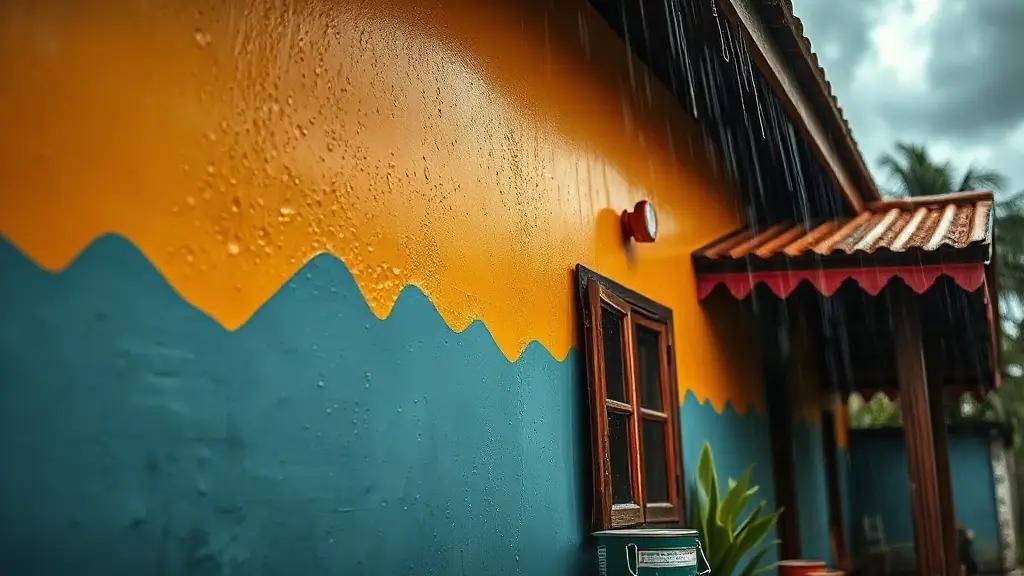
When the monsoon season sweeps across Tamil Nadu, it does not just bring relief from the summer heat — it also brings relentless moisture, driving rain, and humidity that can wreak havoc on your walls. Just as people switch to waterproof products to protect themselves during the rains, homeowners and contractors must think the same way about their buildings. The right paint system is your home's best defence against seepage, dampness, and peeling. Understanding which products to apply, and in what order, can make the difference between a wall that lasts a decade and one that crumbles within a single monsoon.
Why Monsoon Moisture is the Biggest Threat to Your Walls
Tamil Nadu experiences some of the heaviest rainfall in South India, particularly during the northeast monsoon. Water finds its way into the tiniest cracks in plaster, travels behind paint films, and causes bubbling, flaking, and ugly stains. Over time, unchecked moisture leads to structural damage that costs far more to repair than it would have to prevent. Walls that face the rain directly — especially north-east and east-facing elevations — are at the highest risk and deserve extra attention before the clouds roll in.
The problem is compounded when the underlying surface is not properly prepared. Applying fresh paint over a dusty, uneven, or weakly bonded surface simply delays the inevitable. That is why surface preparation using a quality wall putty is so important — it fills hairline cracks, smooths out imperfections, and gives your topcoat a strong, stable foundation to grip onto, dramatically reducing the chances of moisture penetration at the surface level.
Choosing the Right Exterior Paint for Heavy Rainfall Conditions
Not all paints perform equally when they face months of continuous moisture exposure. Standard interior emulsions should never be used on outdoor surfaces, yet this is a mistake many homeowners make to cut costs. A purpose-formulated exterior paint is engineered with binders and additives that resist water absorption, UV degradation, and algae growth — all of which are rampant during and after the monsoon season in Tamil Nadu. Look for products with a high water-repellency rating and a proven track record in humid coastal and semi-coastal climates.
For buildings in low-lying areas or those with flat roofs and terraces, a dedicated waterproofing solution applied before the topcoat is highly recommended. These products create an elastic, seamless membrane that expands and contracts with temperature changes without cracking, effectively blocking water at the source. Contractors working on multi-storey buildings and independent houses alike should treat waterproofing as a non-negotiable step rather than an optional upgrade.
Protecting Wood Surfaces and Adding Decorative Durability
Monsoon damage is not limited to masonry walls. Wooden doors, window frames, and exterior woodwork are extremely vulnerable to swelling, warping, and fungal growth when exposed to persistent humidity. Applying a coat of quality wood primer before your finishing paint seals the wood grain, prevents moisture absorption, and greatly extends the life of the painted surface. Skipping this step is one of the most common — and costly — mistakes property owners make during renovation projects.
If you want to add visual appeal while also boosting surface durability, consider texture paint for feature walls and semi-exposed areas. Modern texture finishes not only create an attractive aesthetic but also add a thicker paint film that provides an additional barrier against light rain and condensation. Many contractors in Tamil Nadu are now combining texture finishes on accent walls with high-performance exterior coatings on the main facade for both beauty and long-term protection.
Frequently Asked Questions
Q: When is the best time to paint my home's exterior in Tamil Nadu?
Ideally, exterior painting should be completed before the monsoon arrives — typically between February and May. If painting during or after rains, choose dry spells of at least two to three consecutive days and ensure walls are fully dry before application. Surface moisture is the enemy of good paint adhesion.
Q: Do I really need a separate waterproofing product if I use good exterior paint?
For most standard walls with no active seepage, a premium exterior paint with water-repellent properties may be sufficient. However, for terraces, sunken slabs, bathrooms, or walls with existing cracks or leakage history, a dedicated waterproofing coat applied beneath the exterior paint provides a much stronger and longer-lasting barrier against moisture damage.
Q: How many coats of exterior paint should I apply for monsoon protection?
A minimum of two finish coats over a properly primed and puttied surface is the standard recommendation. For high-exposure walls facing heavy rainfall or those in coastal Tamil Nadu districts, three coats may be advisable. Always follow the manufacturer's recoat time and do not rush between coats — adequate drying time ensures maximum film build and protection.
Related Products at Quality Colours
- Waterproofing Solutions — Protect terraces, roofs and exterior walls from monsoon seepage
- Exterior Paint — High-performance, weather-resistant finishes for Tamil Nadu climates
- Wall Putty — Smooth, crack-free surface preparation before painting
- Texture Paint — Decorative and durable finishes for interior and exterior walls
- Wood Primer — Seal and protect wooden doors, windows and frames from humidity
Need expert paint advice? Call or WhatsApp Quality Colours: +917418831122


