
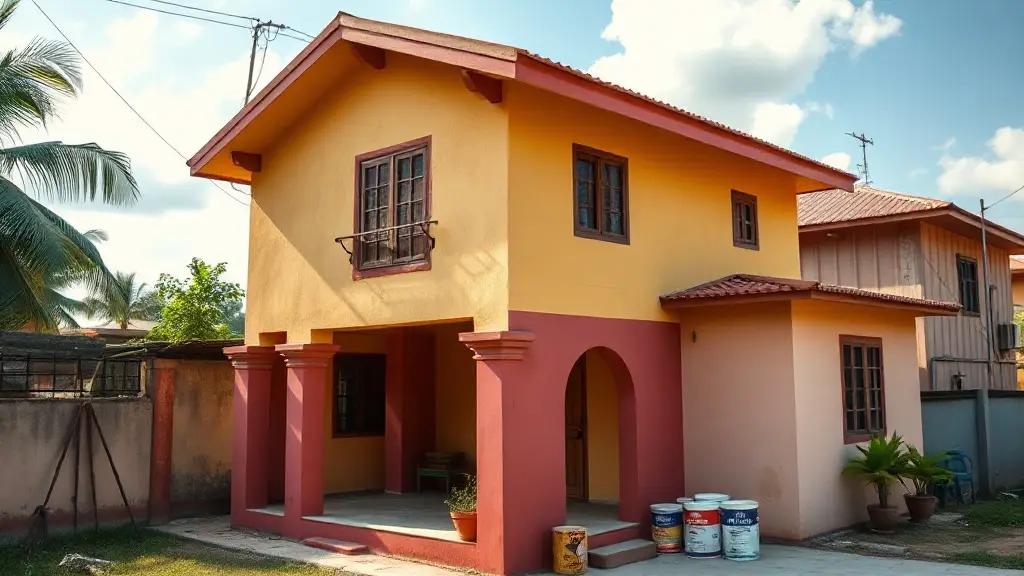
When a leading paint manufacturer sends its exterior paint into the stratosphere at nearly 86,000 feet to prove its durability, it sends a powerful message to homeowners and contractors everywhere: paint performance truly matters. While most of us in Tamil Nadu are not worried about cosmic radiation or sub-zero temperatures at altitude, we do face our own brutal conditions — scorching summers, heavy monsoon rains, high humidity, and relentless UV exposure. Understanding what makes paint genuinely durable helps you make smarter choices for your home or project, and that is exactly what we will break down in this post.
Why Extreme Durability Testing Matters for Everyday Paint
Sending paint samples to the edge of the atmosphere may sound like a marketing stunt, but it actually highlights a very real challenge: how does a paint coating hold up under intense UV radiation, extreme temperature swings, and moisture? These are precisely the forces that also batter the exterior walls of homes across Tamil Nadu every single year. The stratospheric test exposes paint to conditions far harsher than any climate on Earth, acting as a compressed simulation of years of wear in just a few hours.
For homeowners and contractors, this kind of rigorous testing signals that durability is no longer an afterthought — it is a core engineering goal. When you choose a high-quality exterior paint for your building, you are investing in a product that has ideally been put through demanding performance checks. Look for paints that specify UV resistance, anti-algae properties, and weather-resistance ratings, especially if your property faces the western sun or heavy south-west monsoon winds common in Tamil Nadu.
The Real Enemies of Paint in Tamil Nadu's Climate
You do not need to go to the stratosphere to find conditions that destroy paint. Tamil Nadu's coastal humidity, intense summer heat reaching above 40°C, and the annual north-east monsoon create a punishing environment for any surface coating. Moisture is the single biggest culprit — seeping into poorly prepared walls, causing blistering, peeling, and the dreaded black mould growth that ruins the appearance of even freshly painted homes.
This is why proper surface preparation is just as important as the paint itself. Applying a quality wall putty before painting smooths the surface and significantly reduces water absorption into the plaster substrate. On top of that, using a dedicated waterproofing solution on exterior and terrace walls creates a barrier that prevents seepage before it even begins. No paint — no matter how dramatically it has been tested — can compensate for skipped prep steps on a poorly sealed wall.
Choosing the Right Paint System for Long-Lasting Results
Professional contractors in Tamil Nadu already know that a paint job is only as strong as its weakest layer. A complete paint system — primer, undercoat, and topcoat — works together to deliver the kind of durability that extreme tests are designed to prove. For wooden doors, window frames, and furniture, starting with a good wood primer seals the grain, prevents swelling from moisture, and ensures the topcoat bonds properly for a finish that lasts for years.
For those looking to add both protection and visual character to their interiors or feature walls, texture paint is an excellent option. Beyond its decorative appeal, texture paint adds a layer of thickness that helps mask minor surface imperfections and provides an additional barrier against everyday scuffs and moisture. Whether you are renovating a villa in Coimbatore or finishing a commercial space in Chennai, choosing the right combination of products — and applying them correctly — is what separates a paint job that looks good for six months from one that still looks great after six years.
Frequently Asked Questions
Q: How does extreme UV exposure affect exterior paint on Tamil Nadu homes?
Prolonged UV radiation breaks down the pigments and binders in paint, causing fading, chalking, and cracking over time. Tamil Nadu's intense sun makes UV-resistant exterior paint essential. Always choose products rated for high UV climates and apply them over a properly prepared, primed surface.
Q: Is wall putty really necessary before painting interior walls?
Yes, absolutely. Wall putty fills micro-pores and imperfections in plastered surfaces, creating a smooth, sealed base that improves paint adhesion and reduces the amount of paint needed. Skipping putty often leads to uneven finish, faster peeling, and poor coverage — costing more money in the long run.
Q: How often should I repaint the exterior of my home in Tamil Nadu?
With standard paint and average conditions, most exteriors need repainting every 3–5 years. However, using a premium waterproof exterior paint combined with a proper waterproofing treatment on vulnerable areas can extend that cycle to 7–10 years, saving you significant cost and disruption over time.
Related Products at Quality Colours
- Exterior Paint – Weather-resistant formulas for Tamil Nadu climates
- Wall Putty – Smooth surface preparation before painting
- Waterproofing Solutions – Protect walls from monsoon seepage
- Texture Paint – Decorative and protective interior finishes
- Wood Primer – Essential base coat for all wooden surfaces
Need expert paint advice? Call or WhatsApp Quality Colours: +917418831122


