
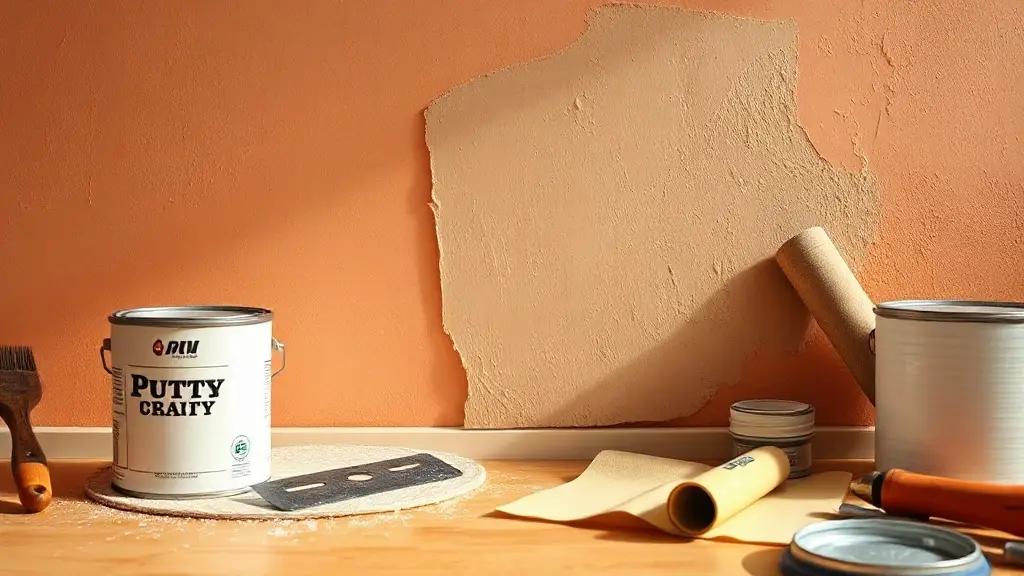
The wall putty market in India just got more interesting. A leading building materials brand recently launched a wall putty product engineered to deliver three layers of protective performance in a single application. For homeowners and contractors across Tamil Nadu — where heat, humidity, and monsoon rains constantly challenge interior and exterior surfaces — this kind of innovation is worth paying attention to. Understanding what advanced wall putty can do for your walls helps you make smarter decisions before your next painting project, whether you're refreshing a bedroom or repainting the full exterior of a commercial building.
What Does Triple-Action Wall Putty Actually Do?
Traditional wall putty is applied before painting to create a smooth, even base on plastered surfaces. It fills hairline cracks, levels uneven spots, and improves paint adhesion. A triple-action or triple-shield formulation goes several steps further by combining surface smoothening, enhanced bonding strength, and moisture resistance into one product. This means fewer coats, less material waste, and a dramatically improved base that helps the topcoat — whether that's a premium emulsion or exterior paint — last considerably longer.
For Tamil Nadu's climate, moisture resistance is particularly important. Walls in coastal districts like Chennai, Nagapattinam, and Kanyakumari are exposed to high ambient humidity almost year-round. A wall putty with built-in moisture barrier properties helps prevent the kind of bubbling and peeling that typically appears within one or two monsoon seasons after a standard paint job.
Why the Base Coat Matters as Much as the Topcoat
Many homeowners focus almost entirely on choosing the right paint colour and finish, but experienced contractors will tell you that the prep work — especially the putty application — determines how long a paint job actually holds up. Even the highest-quality exterior paint will crack, flake, or lose its sheen prematurely if it's applied over a weak or poorly bonded base. Investing in a good-quality wall putty is one of the most cost-effective decisions you can make in any repainting project.
This principle applies just as strongly indoors. Kitchen and bathroom walls, which face steam and occasional splashing, benefit enormously from a moisture-resistant putty base. Applying a quality wall putty before your interior emulsion coat reduces the risk of staining, fungal growth, and surface deterioration — common complaints we hear from homeowners across Coimbatore, Madurai, and Salem.
How to Choose the Right Wall Putty for Tamil Nadu Conditions
Not all wall putty products are equal, and the right choice depends on whether you're working on interior or exterior surfaces, new construction or repainting, and the specific climate zone of your location. For exterior walls, look for putty that explicitly claims waterproofing or moisture-shield properties — pairing it with a dedicated waterproofing solution and a good quality exterior paint gives your walls the best possible multi-layer defence. For interior surfaces, a standard white cement-based putty with good adhesion is usually sufficient, though moisture-prone rooms may benefit from the same moisture-resistant grade used outdoors.
When in doubt, talk to your local paint specialist. At Quality Colours, our team helps contractors and homeowners across Tamil Nadu select the right combination of products — from wall putty and wood primer to texture paint and waterproofing coatings — based on the actual conditions of each project. Getting this combination right from the start saves money, time, and frustration down the line.
Frequently Asked Questions
Q: Is wall putty necessary before painting, or can I paint directly on plaster?
Wall putty is strongly recommended before any paint application. Bare plaster is porous and uneven, which means paint absorbs unevenly, adhesion is poor, and the finish looks patchy. Putty creates a sealed, smooth surface that allows paint to bond properly and look uniform, extending the life of your paint job significantly.
Q: How many coats of wall putty should be applied for the best results?
Typically, two coats of wall putty are applied — the first to fill larger imperfections and the second to achieve a fine, smooth finish. Each coat should be allowed to dry fully before the next is applied, and the final surface should be lightly sanded before painting. For surfaces with deep cracks or damage, additional preparation may be needed before putty application.
Q: Can the same wall putty be used for both interior and exterior surfaces?
Some premium putty products are formulated for both interior and exterior use, but it is generally better to use a product specifically rated for exterior surfaces on outside walls. Exterior-grade putty contains additives that resist moisture, UV exposure, and thermal expansion — conditions that standard interior putty is not designed to withstand. Always check the product label or ask your paint supplier before making a choice.
Related Products at Quality Colours
- Wall Putty — Interior & Exterior Grades
- Exterior Paint — Weather-Resistant Formulations
- Waterproofing Solutions for Tamil Nadu Climates
- Texture Paint — Decorative Finishes for Every Surface
- Wood Primer — Long-Lasting Protection for Timber Surfaces
Need expert paint advice? Call or WhatsApp Quality Colours: +917418831122
Source: Nuvoco Vistas Corporation Limited Introduces Zero M Triple Shield Putty - Machine Maker


